



My Dealer
Culligan Water of Leadington, MO

 Change My Location
Culligan Water of Leadington provides the perfect solution for sparkling dishes, softer clothes, and better-tasting water. We tackle issues of water hardness, iron, sulfur, and much more.

Get soft water service starting at $50/month with no large upfront payments. Offer expires 10/31.
Redeem Offer
*Limited time offer; offers may vary by dealer. Contact dealer for details.
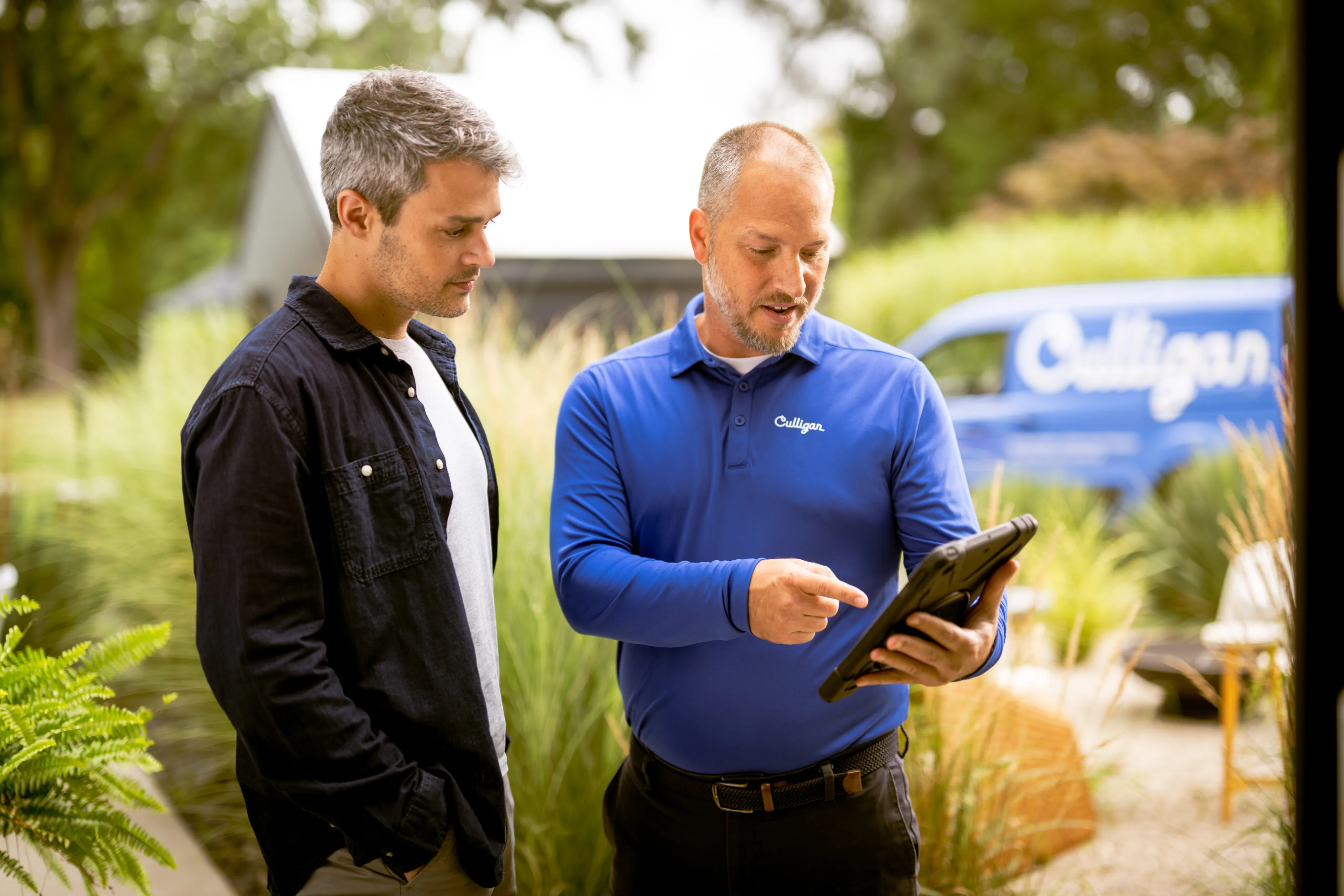
Culligan is dedicated to giving you cleaner, safer, better-tasting water.
From refilling water bottles to drawing a bath or doing yet another load of laundry, we depend on water every day. But have you ever wondered where it all begins? Leadington’s water (both tap water and bottled water) includes rivers, lakes, streams, ponds, reservoirs, springs, and groundwater wells.
Common contaminants found in Leadington and the surrounding area’s drinking water include iron, lead, and sulfur. These issues can often be identified through smell or taste and confirmed through water testing by Culligan. In particular, iron at high levels is associated with a metallic taste, bad smell, rusty-colored water, mineral deposits, and sedimentation.
Your next step? Find out what’s actually in your water. Once we understand your specific water conditions, we can recommend the most innovative solutions in water softening, water filtration, reverse osmosis, and other technologies to address your specific needs. Combine that with our world-class customer service, and the difference speaks for itself.
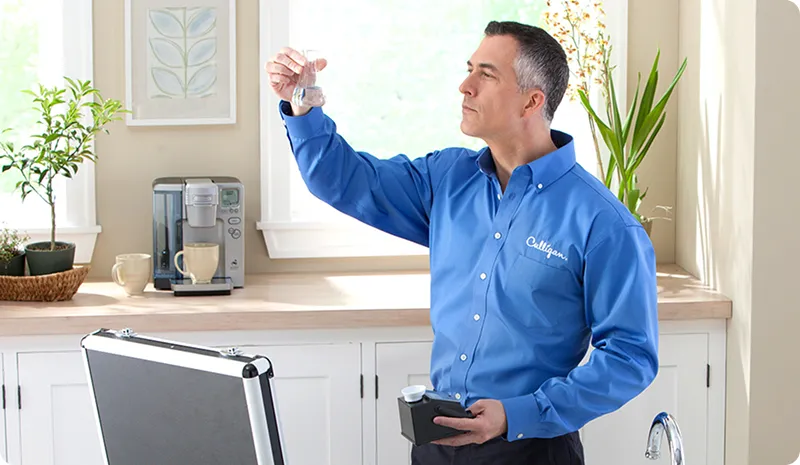
Schedule Your Free Water Test

Your local water experts since 1936
As the leader in water treatment for 85+ years, Culligan is dedicated to improving lives and protecting the planet by providing access to safer, better-tasting and more sustainable water.

Backed by science
and sustainability
We’re passionate about finding new ways to bring you better water solutions through sustainability-driven innovation.

Unmatched
care
Enjoy white-glove service, expert installation and hassle-free maintenance.

Long-standing
trust
With over 85 years of water treatment experience trusted by over 150 million customers, you can count on us to provide the solutions and service you need, anytime.

100% satisfaction
guarantee
If you’re not completely satisfied within 30 days of purchase, we’ll refund the cost.
Common water problems near you
Even though you have limited control over the quality of water entering your home, once it comes out of the tap it’s your problem. Culligan can help you fix water issues so you end up with cleaner, safer, better tasting water.
Hard Water
Hard water results from high levels of calcium and magnesium in water. Hard water minerals stick to everything water touches, and do more than leave an unsightly residue – they can actually harm your home and cost you money.

Smelly Water
Before your water enters your home, it can pick up smelly contaminants – from the soil around private wells, miles of underground utility pipes or even the local municipal water source itself. You may not be able to see these contaminants, but as soon as you turn on the tap or lift a glass to your face, something is obviously not right.
Contaminants
Some of the most dangerous water contaminants have no taste, smell or appearance. Contaminants can enter your water via private wells, miles of underground utility pipes or even the local municipal water source.

How it works
Better water is on your mind, so eliminate the worries and contact the team of local Culligan water experts.
With a free water consultation from Culligan, you’re no longer left guessing why stains show on your appliances after you clean them. Or your laundry just never seems to come out completely clean. There are a wide variety of factors that can impact the quality of what’s coming out of your tap; our certified consultants can pinpoint the issues and get you to cleaner, safer water.
01
Schedule your free water consultation.

02
A certified water consultant from Culligan will visit your home.

03
Select your Culligan system and get water you love.

Water care solutions for you
Backed by over 85 years of experience, your local Culligan water expert has a wide range of products to address your unique water concerns.
Water Softeners
RO Systems
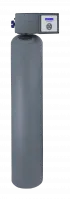
Whole House Filtration
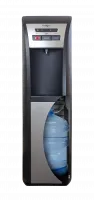
Water Delivery & Dispensers
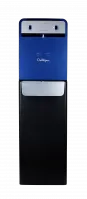
Bottleless Coolers
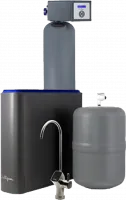
Well Water Solutions
Local offers from
your dealer
Special Offer!
Healthier skin. Cleaner Clothes. Softer Water!
Get soft water service starting at just $50/month.
*Offer expires 10/31.
Offer Extended!
Get bottled water delivery service FREE for the first 30 days!
Offer includes three five-gallon or 18.9 liter bottles + standard cooler rental.
*Offer expires 9/30.
Limited time offer; offers may vary by dealer. Promotion may be subject to term agreement.
Contact dealer for more details.
FAQs
Answering all your water questions
Water may seem simple, but there are a lot of complicated questions surrounding this everyday liquid. We’re here to answer all your water questions and make sure you have everything you need to get the most out of every drink. If you have any additional questions, don’t hesitate to contact your local Culligan Water dealer.
How do I know if my faucet is RO compatible?
Culligan RO systems are designed to work with most standard faucets. However, a Culligan technician can confirm compatibility during consultation.
What is the life expectancy of a water softener?
On average, Culligan water softeners have a life expectancy of 10-15 years, but this can vary depending on water quality, usage, and maintenance. Regular servicing can help your water softener reach its maximum lifespan.
Will a water softener remove existing limescale?
While a water softener prevents future scale buildup, it will not remove existing limescale in pipes or appliances. Over time, softened water may help reduce deposits, but it’s best to remove existing limescale manually.
What size hole is needed in countertops to work with the Culligan RO system?
For Culligan’s Reverse Osmosis (RO) system, the recommended hole size is 7/8 of an inch.
How do I know which water softener I need?
The best way to determine the right water softener is through a free water test with Culligan. We assess factors such as water hardness and usage to recommend the perfect solution for your home water supply.
How much salt does my water softener need?
Typically, Culligan water softeners require a 40-pound bag of salt every 4-6 weeks, depending on water hardness and household size.
How long does a Solar Salt refill last?
A Solar Salt refill can last between 4 and 6 weeks, depending on water usage and hardness levels.
How often does a water softener regenerate?
Most Culligan water softeners regenerate automatically every 2-3 days, although some high-efficiency models may regenerate less frequently, further saving water and salt.
How do I order Culligan Aqua Cleer replacement filters?
You can order replacement filters directly from your local Culligan dealer. They will recommend the right filter based on your system model and usage, ensuring optimal odor reduction and filter material performance.
What’s the difference between an RO system and a water softener?
An RO system filters impurities like chemicals and lead from drinking water, while a water softener removes hard minerals that cause scale buildup. Each system targets different water quality issues.
Are bottle-less water coolers expensive to run?
No, Culligan’s bottle-less water coolers are energy-efficient and designed to use minimal electricity, making them cost-effective in both home and office environments.
How much electricity does a water cooler consume?
Most of Culligan’s water coolers use around the same amount of electricity as a standard refrigerator. However, energy-efficient features like self-cleaning and automatic shut-off help keep power usage low.
What’s the difference between a water cooler and a water dispenser?
A water cooler typically chills water for drinking, while a water dispenser may offer room temperature or even heated water for tea or cooking. Culligan’s bottle-free water dispensers offer multiple temperature options, including cold, room temp, and hot water.
Can mold grow in my water cooler?
Culligan’s self-cleaning water coolers include technology designed to prevent mold and bacteria growth. Regular maintenance and filter changes ensure your cooler remains clean and safe for use.
How often should a bottle-less (tankless, POU) water cooler be cleaned?
We recommend cleaning your bottle-free cooler every 6-12 months depending on usage, or as part of regular maintenance service to keep the system performing optimally.
How much water should I drink?
The average adult needs 8-12 8-ounce servings of water per day. Hydration needs can vary based on level of activity, health circumstances, and age.
For instance, a 60-pound child may only need about 30 ounces of water a day (3-4 glasses), while a 180-pound man would need about 90 ounces a day (11-12 glasses).
As people age they may need more water since thirst signals dull, activity levels drop, and prescription drugs may dehydrate the body.
What is RO (reverse osmosis)?
In simple terms, reverse osmosis is a process that forces water molecules through a semi-permeable membrane. The membranes in Culligan’s reverse osmosis systems are capable of filtering out impurities smaller than one micron. Reverse osmosis filtration can be used to create filtered water anywhere, including homes and commercial businesses such as restaurants, hotels, car washes, breweries, and even a space shuttle.
Reverse osmosis systems and bottled water coolers are the two most cost-effective means of enjoying great-tasting water in your home.
What does a typical RO system remove from water?
A Culligan reverse osmosis system (RO system) is a water purifier that reduces or eliminates nearly 50 different types of chemicals and other impurities.
Some examples of what RO can remove include, but are not limited to, toluene, lead, PCBs, dichloropropenes, trichloroethanes, insecticides, and ethylbenzene.
Is RO water really as good as bottled water?
Absolutely. A reverse osmosis (RO) system employs a number of processes to produce great-tasting, low-sodium drinking water. An RO system eliminates around 97% of total dissolved solids (TDS) like salt and sodium from your water. Most bottled water companies, including Culligan, use reverse osmosis in their bottling process. So with a reverse osmosis system, you are essentially getting “bottled water without the bottle.”
Has Culligan Water received any endorsements?
Good Housekeeping has given the Culligan® HE water softener, our Aqua-Cleer® water filter, and seven other Culligan products their powerful seal of approval. In addition, the Culligan® HE water softener was also named a “Best Buy” by Consumers Digest magazine in 2012.
What is Culligan Water’s 100% satisfaction guarantee?
If you aren’t completely satisfied by your water products or services, we offer a full refund within 30 days of your purchase.
What should I consider before buying a water treatment solution?
Water hardness
It is important to have your water tested for hardness and other factors to determine your exact needs. Even if you already know you have one or more water problems, getting a water test is an excellent first step to choosing a water treatment solution. Do you have hard water or poor water quality? Find out with our free water test.
When evaluating your needs, an expert will consider a number of factors. For instance, the current hardness level and the size of a family will have an impact on the type and size of the equipment required. The same holds true for drinking water systems.
Your water usage and pressure
Water pressure and the amount of water used are important factors to look at when outfitting your home with a system for improving water quality. The size of your household may influence water usage, and different families have different water needs. Factors such as expected family growth and guest visits should also be taken into account.
Avoid a “quick fix”
Finding a fix for an existing water problem is your primary focus, but don’t be too quick to go with the cheapest water treatment solution. You might find that a higher-end system will be more efficient and handle your needs better. Before making a purchase, get a detailed estimate for the cost of equipment, installation, and maintenance to make sure you are getting your money’s worth.
Buy from a reputable dealer
A reputable water treatment equipment dealer can be an excellent resource when you need help determining your water conditioning needs. Culligan® is the most trusted name in the water treatment industry.
Financing options
You may be able to get the price of your water conditioning equipment financed under FHA Title 1 or private lending agreements. Make sure to check with your bank or finance company to get more information. Local dealers may offer special financing options as well.
What questions should I ask after I’ve decided on a water treatment solution?
Picking the right water quality improvement system doesn’t have to be a chore. Here are some helpful questions you can ask to make sure you are getting the best water treatment system for you and your family.
- Does the price include installation?
- Will installation include all the features you might need?
- Will installation include a bypass to provide garden and lawn faucets or a faucet for unsoftened water?
- Will the system have the capacity to support your current and future needs?
- If you are leasing equipment does your agreement include an option to buy?
- Does the dealer you are planning on buying from have an established business in your area?
- Are there any customer references for your dealer?
- Have you had your water tested by a reputable lab and/or the local health department for health-related problems?
- Will a representative call to consult with you to determine the right system for you?
- Did the salesperson explain the cost and method of regenerating the system?
- Did the salesperson provide answers to all of your questions about the design, function, and cost of the system?
- Are there maintenance contracts or other after-sale services available from your dealer?
- Will the equipment come with a written warranty?
- Did you make sure to read and understand the terms of the warranty?
What is hard water?
Hard water is one of the most common water problems that can occur in the home. Hard water can cause your dishes and glasses to have spots, cause a buildup of scale and soap scum, and make laundry colors dull. All of these problems make cleaning a chore. The typical cause of hard water is dissolved calcium and magnesium minerals in the water supply.
The Water Quality Association defines hard water as water that has a concentration of dissolved minerals above 1 GPG (grains per gallon). Levels of hardness are described as follows:
- Soft Water: Less than 1 GPG
- Slightly Hard Water: Between 1 and 3.5 GPG
- Moderately Hard Water: Between 3.5 and 7 GPG
- Hard Water: Between 7 and 10.5 GPG
- Very Hard Water: More than 10.5 GPG
An ion exchange water softener is the most common method for treating hard water.
Why is iron a problem in my water?
Rust is caused by iron in water and comes from five different forms. Particle iron and clear water iron are the two most common. These types of iron can cause staining of tubs, sinks, laundry, and even your hair. Iron bacteria, colloidal iron, and organic iron are the three other types of iron that can be found in water. These types of iron will cause red stains, sulfurous odor, and a tea colored appearance of your water. A special iron water filter can be used to eliminate iron in your water.
What is the difference between softening water and filtering water?
You don’t need a degree in hydrology to understand the basics of water softening and water filtration. Here’s an abbreviated version of what happens when softening or filtering water.
Filtering water is the process of separating impurities like minerals, particulates, iron, hydrogen sulfide, or any other organic matter, from the water. This is achieved by passing the water through a “filter bed” or “media bed,” which traps impurities and cleans the water.
Softening water involves an “ion exchange” process that removes dissolved solids like magnesium, calcium, iron, and manganese from water. These dissolved solids can’t be captured by a filter bed. Water softeners use resin beads with sodium ions attached to the resin. The resin attracts dissolved calcium and magnesium, exchanging its sodium ions for the dissolved solids and ridding the water of those impurities.
Do I need filtering or softening?
To determine if you need a water filter system or a water softening system, you must first determine what impurities are in your water. Culligan Water Filters will eliminate particles in your water that can cause staining, odors, and excessive cleaning. A home water filter from Culligan will protect you and your family from undesirable impurities in your water.
Water softening eliminates dissolved minerals that cause hard water spots and lime-scale. Cleaning will become easier because your water will work with you, not against you.
To find out if impurities are in your water, contact your local Culligan® Dealer to schedule your free in-home water test.
Is it hard to maintain or service a water softener?
If you currently have a water softener, you can stop worrying about buying salt and filling the tank, thanks to the Culligan Advantage Plus® Program.
With the Culligan Advantage Plus® Program, a Culligan Water expert will deliver salt directly to your home and into your water softener. We’ll work with you to assess your salt usage so salt can be delivered automatically right when you need it. With every salt delivery your Culligan expert will perform a six-point water softener inspection that involves checking time settings, evaluating salt and water levels, and looking for leaks. This inspection will establish if you are in need of a water softener repair. Afterwards, any remaining salt bags will be neatly stacked and empty bags will be disposed of.
Stop lugging home heavy bags of salt. Contact your local Culligan® Dealer to learn more about this convenient service.
What is regeneration?
Regeneration refers to the action of water softeners “recharging” resin beads after they have become “full” of calcium and magnesium and have lost their ability to soften water. There are a number of ways a regeneration cycle can be “triggered.”
Clock regeneration occurs when the regeneration cycle is activated after a certain amount of time has passed.
Metered regeneration occurs when the regeneration cycle is triggered after a set amount of water has been used.
However, Smart-Sensor® regeneration is the most effective and efficient regeneration technique. Smart Sensors test the electrical conductivity of resin beads to determine precisely when regeneration is needed based on actual demand. This method of triggering a regeneration cycle is particularly valuable when water hardness varies from day to day.
Smart-Sensor® technology is exclusive to Culligan Water and can save almost two tons of salt and 20,000 gallons of water over a 10-year period — saving you more than any other brand.
If you currently have a water softener, you can stop worrying about buying salt and filling the tank, thanks to the Culligan Advantage Plus® Program.
Are there harmful effects of water softener discharges on household septic tanks?
According to the Water Quality Association (WQA), discharge from water softener regeneration has no negative effect on septic systems or leach fields. In fact, studies show that the discharge may actually benefit septic tank system operation by improving soil percolation, particularly in fine-textured soils.
Will softened water affect my lawn or garden?
Using softened water outside for lawns or gardens is not only wasteful, but in some cases the sodium content of the softened water could be high enough to stunt plant growth and harm grass. Climates with little rainfall are more susceptible to these problems because they don’t receive enough rain to rinse away the accumulation of sodium in the soil.
Be sure to ask the Culligan Water dealership that is installing your water softener about a bypass for your lawn and garden spouts, and about a faucet for un-softened water.
What are the differences between various types of bottled water?
Have you bought bottled water recently? Did you see all the different types that are now available? While there are different sources for bottled water, all water that is labeled as “drinking water” or “bottled water” is regulated by the Food and Drug Administration (FDA) and must meet certain standards.
According to the FDA, for a product to be considered “bottled water” it cannot contain sweeteners or chemical additives (other than flavors, extracts or essences) and must be calorie-free and sugar-free. Flavors, extracts and essences — derived from spice or fruit — can be added to bottled water, but these additions must comprise less than 1% by weight of the final product. Beverages containing more than the 1% by weight flavor limit are classified as soft drinks, not bottled water.
What is in bottled water?
The FDA defines the various types of water as follows:
- Artesian Water: Bottled water from a well that taps a confined aquifer (a water-bearing underground layer of rock or sand).
- Mineral Water: Contains no less than 250 parts per million of total dissolved solids (minerals). No minerals can be added to this product.
- Purified Water: Water labeled as “purified” can be derived from either distillation, deionization, or reverse osmosis.
- Sparkling Water: Water that, after treatment and possible replacement with carbon dioxide, contains the same amount of carbon dioxide that it had at emergence from the source. (An important note: soda water, seltzer water, and tonic water are not considered bottled waters. They are regulated separately and may contain sugar and calories. These types of carbonated water are considered soft drinks.)
- Spring Water: Bottled water derived from an underground formation from which water flows naturally to the surface of the earth.
Your local Culligan Water Dealer delivers crystal clear bottled water in a variety of sizes: Spring Water (1, 2.5, 3 and 5 Gallon); Distilled Water (1 Gallon); Pure Drinking Water (20oz, 24oz, 1/2 liter, 1 liter and 1 1/2 liter, 1 gallon, 2.5 gallon, 3 gallon, 5 gallon).
Contact your local Culligan Water Dealer to find out what products they carry, and to discuss your water needs.
Which zip codes does this location serve?
62244, 62277, 62295, 63012, 63016, 63019, 63020, 63023, 63028, 63030, 63036, 63041, 63047, 63048, 63050, 63051, 63052, 63057, 63060, 63061, 63065, 63066, 63070, 63071, 63072, 63080, 63087, 63601, 63620, 63621, 63622, 63623, 63624, 63625, 63626, 63627, 63628, 63629, 63630, 63631, 63633, 63636, 63637, 63638, 63640, 63645, 63648, 63650, 63651, 63653, 63654, 63655, 63656, 63660, 63662, 63663, 63664, 63665, 63666, 63674, 63675, 63751, 63775, 63787, 63934, 63937, 63950, 63956, 63957, 63964, 63965, 65439, 65440, 65441, 65456, 65466, 65560, 65565, 65566, 65588
Which cities does this location serve?
Annapolis, Arcadia, Barnhart, Belgrade, Belleview, Bismarck, Bixby, Black, Blackwell, Bloomsdale, Bonne Terre, Boss, Bourbon, Bunker, Cadet, Caledonia, Cedar Hill, Centerville, Clubb, Crystal City, Davisville, De Soto, Des Arc, Dittmer, Doe Run, Ellington, Ellsinore, Eminence, Farmington, Festus, Fletcher, Fredericktown, French Village, Fults, Glenallen, Grubville, Hematite, Herculaneum, Hillsboro, House Springs, Imperial, Irondale, Ironton, Knob Lick, Leadwood, Lesterville, Liguori, Lodi, Lonedell, Luebbering, Mapaville, Marquand, Middle Brook, Mineral Point, Morse Mill, Park Hills, Patterson, Patton, Perryville, Pevely, Piedmont, Pilot Knob, Potosi, Prairie Du Rocher, Redford, Reynolds, Richwoods, Robertsville, Salem, Silva, Steelville, Sullivan, Tiff, Valles Mines, Valmeyer, Van Buren, Viburnum, Vulcan, Winona, Zalma
Award-winning water
Culligan’s award-winning technology and service have attracted recognition from some of the most trusted names in product testing and quality assurance.


Reviews for Culligan Water of Leadington

/


